Pigmentation Treatment: Causes, Options & When to See a Skin Specialist
Uneven skin tone, dark patches, brown spots, or areas of discoloration can affect the face and other parts of the body. Pigmentation is common and can develop due to several factors, including sun exposure, hormonal changes, acne, inflammation, and certain skin conditions.
The good news is that pigmentation can often be managed with the right diagnosis and a personalised treatment plan. However, the most appropriate approach depends on the type, cause, depth and location of pigmentation.
If you are looking for pigmentation treatment in Kanpur, consulting a qualified skin specialist can help determine what is causing the discoloration before starting treatment.
Primary keyword: pigmentation treatment
What Is Skin Pigmentation?
Skin pigmentation refers to the colour of your skin, which is primarily influenced by melanin, a natural pigment produced by melanocytes.
When the skin produces excess melanin in certain areas, it can result in hyperpigmentation. This may appear as:
Brown or dark patches
Dark spots after acne or skin irritation
Uneven facial skin tone
Sun spots
Melasma-related pigmentation
Dark marks left after inflammation or injury
Pigmentation can vary considerably from person to person, so treatment should ideally be based on an assessment of the underlying cause.
What Causes Pigmentation?
Several factors can contribute to pigmentation. Common causes include:
1. Sun Exposure
UV radiation can stimulate melanin production and make existing pigmentation more noticeable. Regular, unprotected sun exposure may also contribute to the development of new dark spots.
2. Hormonal Changes
Hormonal fluctuations can trigger conditions such as melasma, which commonly appears as symmetrical brown or greyish patches on the face.
Hormonal pigmentation may occur during pregnancy or alongside other hormonal changes.
3. Acne and Skin Inflammation
Pimples, rashes, injuries or irritation can sometimes leave dark marks after the original inflammation has settled. This is commonly referred to as post-inflammatory hyperpigmentation (PIH).
4. Skin Irritation
Using unsuitable skincare products, excessive exfoliation or repeated irritation can worsen discoloration in some individuals.
5. Certain Medications or Medical Conditions
Some medications and underlying medical conditions can contribute to changes in skin colour. If pigmentation develops suddenly or changes significantly, medical evaluation may be appropriate.
What Are the Common Types of Pigmentation?
Understanding the type of pigmentation is an important part of choosing an appropriate treatment.
Melasma
Melasma typically causes brown or grey-brown patches, particularly on areas of the face such as the cheeks, forehead, upper lip and nose. Sun exposure and hormonal factors can play a role.
Post-Inflammatory Hyperpigmentation
PIH can develop after acne, burns, rashes, cuts or other forms of inflammation. It may gradually fade, although this can take time.
Sun-Induced Pigmentation
Repeated UV exposure can lead to persistent dark spots and uneven skin tone, particularly on areas that receive frequent sunlight.
Because different pigmentation conditions can look similar, self-diagnosing based only on appearance may not always be reliable.
How Is Pigmentation Treated?
There is no single pigmentation treatment that is suitable for everyone. A dermatologist or skin specialist may first assess your skin, pigmentation pattern, medical history and contributing factors.
Depending on the diagnosis, treatment may involve one or more approaches.
Topical Treatments
Certain prescription or dermatologist-recommended topical products may help reduce pigmentation or regulate excess melanin production.
The choice of product depends on factors such as the type of pigmentation and your skin's sensitivity.
Chemical Peels
In selected cases, dermatological chemical peels may be considered to improve pigmentation and uneven skin tone.
The type and strength of peel should be selected professionally because inappropriate or overly aggressive treatment can cause irritation and potentially worsen pigmentation.
Laser or Light-Based Procedures
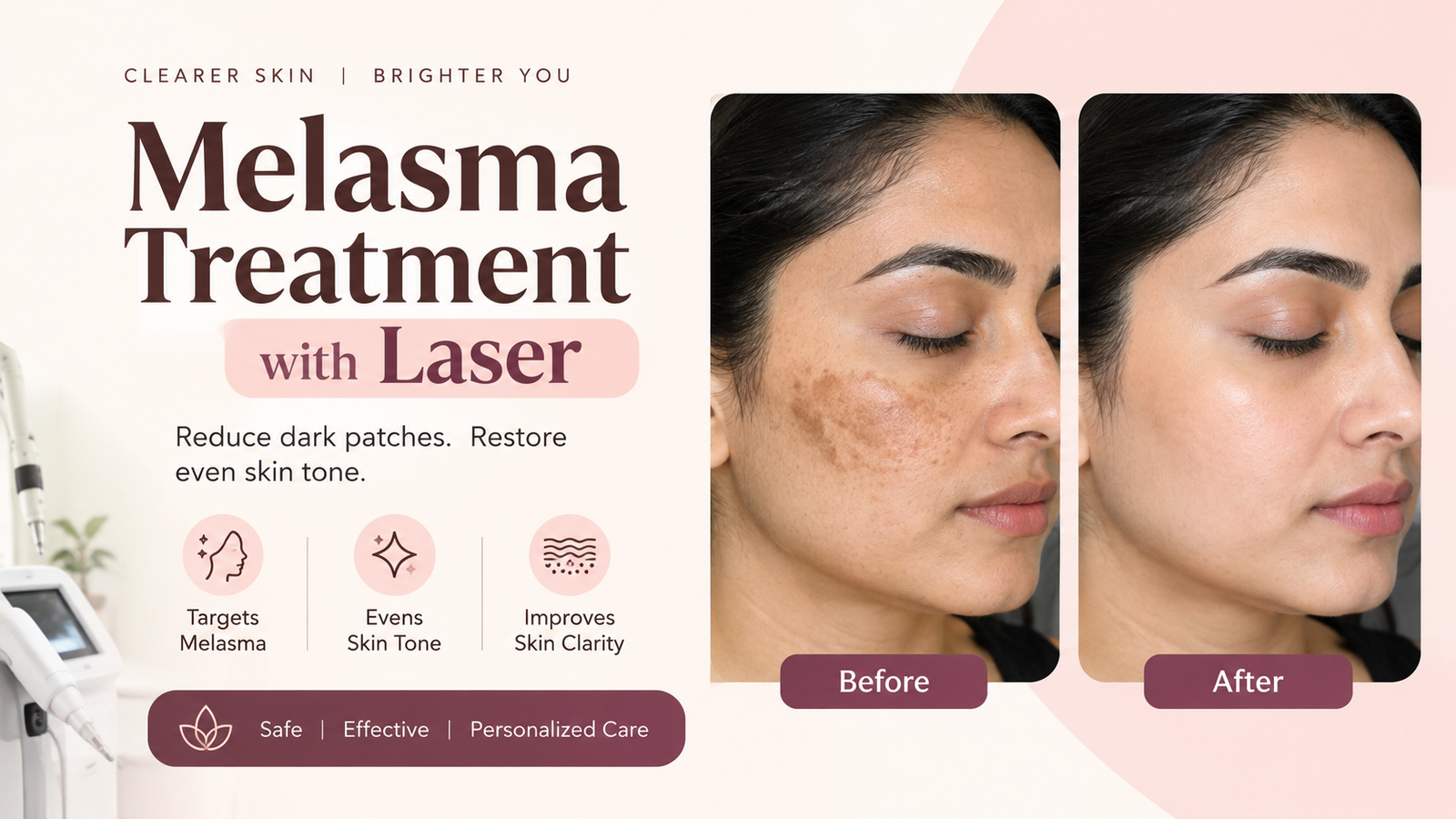
Some pigmentation concerns may be treated with laser or light-based procedures when clinically appropriate. These treatments require careful assessment, particularly for darker Indian skin tones, because inappropriate settings or treatment selection may increase the risk of post-inflammatory pigmentation.
Sun Protection
Sun protection is an important part of managing pigmentation.
Helpful measures include:
Using a broad-spectrum sunscreen as recommended by your dermatologist
Reapplying sunscreen when appropriate
Wearing a hat or using physical protection outdoors
Avoiding unnecessary prolonged sun exposure
Following a consistent skincare routine
Treatment without adequate sun protection may be less effective and pigmentation may return or become more noticeable.
How Long Does Pigmentation Treatment Take?
The timeline varies depending on the cause, severity and depth of pigmentation, as well as the treatment approach.
Some superficial pigmentation may improve gradually, while conditions such as melasma can require longer-term management. Results also vary between individuals.
It is important to avoid products or procedures that promise instant or permanent removal of pigmentation. A realistic treatment plan focuses on improving the appearance of pigmentation while reducing factors that may trigger it again.
When Should You See a Skin Specialist?
Consider consulting a dermatologist if:
Pigmentation is persistent or getting darker
Dark patches are spreading
Pigmentation repeatedly returns
Acne marks are not improving
You are unsure what is causing the discoloration
Over-the-counter products are irritating your skin
You are considering a peel, laser or other professional procedure
A skin specialist in Kanpur can assess the condition and help determine an appropriate treatment approach rather than relying on trial-and-error skincare.
Pigmentation Treatment in Kanpur
If you are searching for a skin doctor in Kanpur for pigmentation concerns, professional evaluation can help identify whether the discoloration is related to melasma, acne marks, sun exposure, inflammation or another cause.
At EVA Skin Clinic, Keshav Nagar, Kanpur, pigmentation concerns can be discussed with a focus on understanding the individual skin condition and selecting an appropriate approach.
If you are considering pigmentation treatment, avoid changing multiple active skincare products at once or using aggressive home remedies. Professional guidance can help reduce unnecessary irritation and support a more consistent skincare routine.
Frequently Asked Questions About Pigmentation Treatment
1. Can pigmentation be completely removed?
The outcome depends on the type and cause of pigmentation. Some forms can improve significantly, while conditions such as melasma may require ongoing management and can recur.
2. What is the best treatment for pigmentation?
There is no universally best treatment. The appropriate option depends on whether the pigmentation is caused by melasma, acne, sun exposure, inflammation or another condition.
3. Can sunscreen help with pigmentation?
Yes. Sun exposure can worsen many types of pigmentation. Consistent sun protection is therefore an important part of pigmentation management.
4. How long does it take for pigmentation to fade?
The timeline varies. Some pigmentation may gradually fade over several weeks or months, while deeper or recurrent pigmentation may require longer-term management.
5. Can acne cause pigmentation?
Yes. Acne-related inflammation can leave dark marks known as post-inflammatory hyperpigmentation. Avoiding unnecessary picking or squeezing of acne may help reduce the risk of marks.
6. Are chemical peels suitable for pigmentation?
Chemical peels may be appropriate for selected pigmentation concerns, but the type and strength should be determined by a qualified professional based on the individual's skin and condition.
7. Should I consult a dermatologist for pigmentation?
If pigmentation is persistent, recurrent, worsening or difficult to identify, consulting a dermatologist or skin specialist in Kanpur can help establish the cause and appropriate treatment plan.
Final Thoughts
Pigmentation is common, but treating it effectively starts with understanding why it developed. Sun exposure, hormonal changes, acne, inflammation and other factors can produce different types of pigmentation, and each may require a different approach.
Rather than relying on harsh home remedies or unverified products, consider getting a professional skin assessment. If you are looking for a skin clinic in Keshav Nagar, Kanpur, EVA Skin Clinic can be considered for discussing your pigmentation concerns and available treatment options