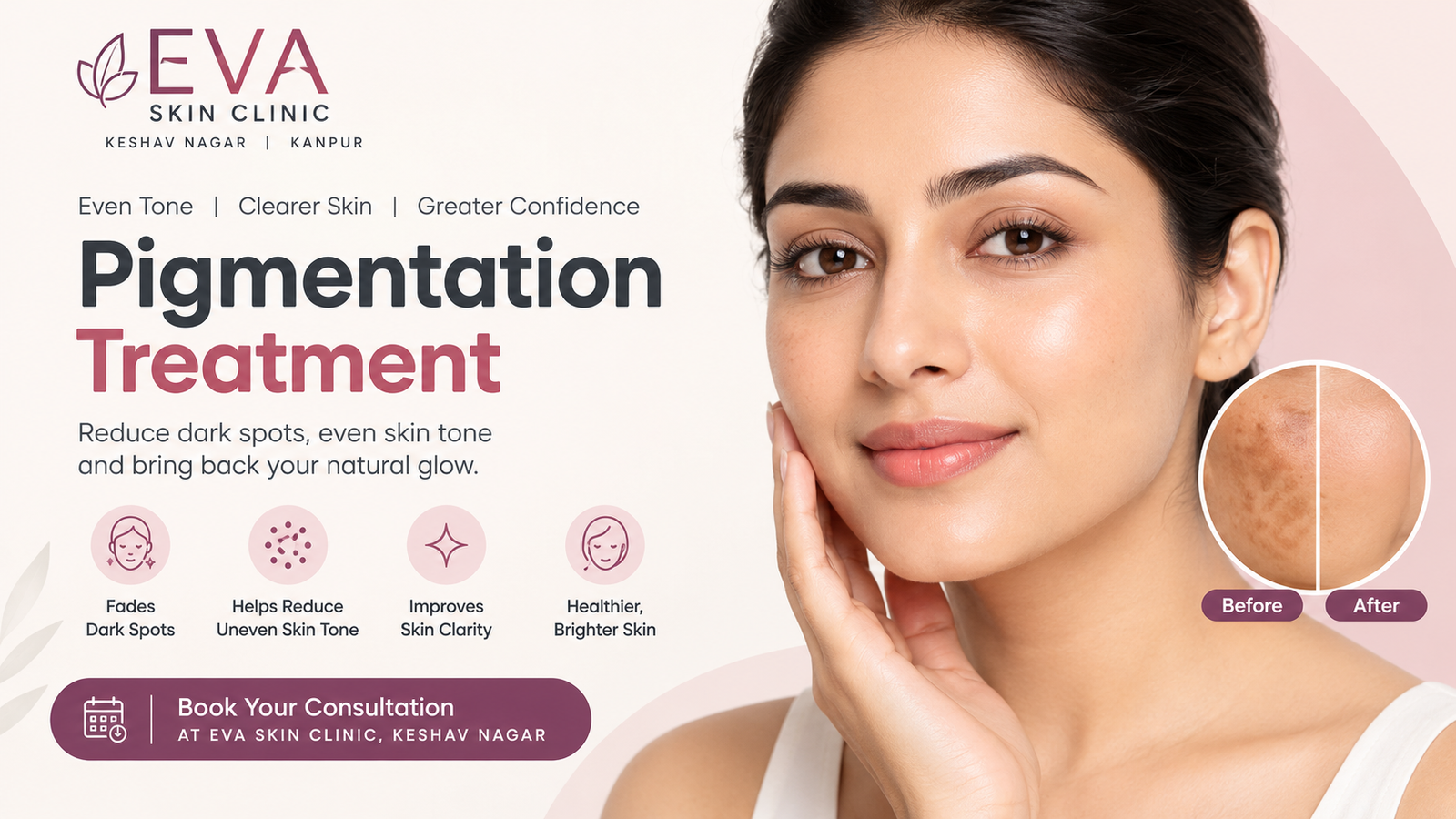
Best Pigmentation Treatment in Kanpur: Causes, Options & Expert Skin Care
Pigmentation is one of the most common skin concerns affecting the face and body. Dark spots, uneven skin tone, brown patches and post-acne marks can develop for several reasons, including sun exposure, hormonal changes, acne, inflammation and skin irritation.
If you are searching for the best pigmentation treatment in Kanpur, it is important to understand that there is no single treatment suitable for everyone. The right approach depends on the type of pigmentation, its cause, your skin type and how your skin responds to treatment.
At EVA Skin Clinic, Keshav Nagar, Kanpur, pigmentation concerns can be discussed as part of an individual skin assessment, helping you understand suitable treatment and skincare options.
What Is Pigmentation?
Pigmentation refers to the colour of the skin, which is influenced mainly by melanin. When the skin produces excess melanin in particular areas, it can lead to hyperpigmentation.
Pigmentation may appear as:
- Brown or dark patches
- Small dark spots
- Uneven facial skin tone
- Dark marks after acne
- Sun-induced pigmentation
- Melasma
- Dark marks following inflammation or irritation
Although pigmentation is often harmless, its appearance can be a concern for many people. Identifying the underlying cause is an important first step before choosing treatment.
What Causes Facial Pigmentation?
Several factors can contribute to pigmentation.
1. Sun Exposure
UV radiation can stimulate melanin production and make existing pigmentation more noticeable. Regular sun exposure can also contribute to an uneven complexion.
For this reason, sun protection is an important part of pigmentation management, whether or not you are receiving professional treatment.
2. Hormonal Changes
Hormonal changes can contribute to melasma, a type of pigmentation that commonly appears on the cheeks, forehead, nose and upper lip.
Melasma can be persistent and may become more noticeable with sun exposure.
3. Acne and Skin Inflammation
A pimple may disappear, but a dark mark can remain behind. This is known as post-inflammatory hyperpigmentation (PIH).
It can occur after acne, rashes, irritation, injuries or other inflammatory skin conditions.
4. Skin Irritation
Overuse of exfoliating products, unsuitable skincare or repeated irritation may aggravate the skin and contribute to discoloration in some individuals.
5. Other Factors
Certain medications, medical conditions and other skin disorders can sometimes cause changes in pigmentation. If pigmentation appears suddenly or changes significantly, professional assessment may be appropriate.
What Is the Best Treatment for Pigmentation?
There is no universal “best” pigmentation treatment. The most suitable option depends on the diagnosis and individual skin characteristics.
A skin specialist may consider different approaches depending on the pigmentation.
Topical Skincare and Prescription Treatments
Certain topical ingredients can help improve the appearance of pigmentation by influencing melanin production or skin cell turnover.
The choice of product should depend on the pigmentation type and your skin's tolerance. Using multiple strong active ingredients without professional guidance can cause irritation and potentially worsen discoloration.
Chemical Peels
Selected chemical peels may be considered for certain pigmentation concerns and uneven skin tone.
The type, concentration and frequency of a peel should be selected according to the individual's skin and condition. Stronger does not necessarily mean better, particularly when treating pigmentation.
Laser-Based Treatments
Some pigmentation conditions may be suitable for laser-based treatment after appropriate evaluation.
Laser treatment requires careful selection of the technology and settings. This is particularly important for Indian skin, where inappropriate treatment may increase the risk of irritation or post-inflammatory pigmentation.
Sun Protection
Regardless of the treatment approach, protecting the skin from UV exposure is important.
Helpful measures include:
- Applying broad-spectrum sunscreen as recommended
- Reapplying sunscreen when appropriate
- Limiting prolonged direct sun exposure
- Using hats or other physical protection outdoors
- Following the skincare routine recommended for your skin
Pigmentation Treatment in Kanpur: Why Diagnosis Matters
Two people can have similar-looking dark patches but completely different underlying causes.
For example, pigmentation following acne may require a different approach from melasma. Similarly, sun-related spots may not be managed in exactly the same way as pigmentation caused by inflammation.
This is why searching for pigmentation treatment in Kanpur should not simply mean choosing the most aggressive procedure. A professional assessment can help determine:
- The likely type of pigmentation
- Possible contributing factors
- Whether treatment is appropriate
- Which treatment options may be considered
- Possible risks and precautions
- How skincare and sun protection can support management
A realistic treatment plan is generally more useful than promises of instant or permanent pigmentation removal.
How Long Does Pigmentation Treatment Take?
The timeline varies from person to person.
Factors that may influence improvement include:
- Type and depth of pigmentation
- Underlying cause
- Skin type
- Duration of the pigmentation
- Treatment approach
- Sun exposure
- Individual response to treatment
Some pigmentation may gradually improve over weeks or months, while conditions such as melasma may require longer-term management because they can recur.
It is therefore important to have realistic expectations and follow the recommended skincare and sun-protection routine consistently.
How to Prevent Pigmentation From Getting Worse
Treatment is only one part of pigmentation care. Daily habits can also make a difference.
Use Sun Protection
Sun exposure can worsen many pigmentation concerns. Regular sunscreen use and physical protection can help reduce additional UV exposure.
Avoid Picking Acne
Squeezing or picking pimples can increase inflammation and may contribute to post-inflammatory pigmentation and scarring.
Don't Overuse Active Products
Using several exfoliating or skin-lightening products simultaneously can irritate the skin. A simple, appropriate skincare routine is often easier to maintain.
Treat the Underlying Problem
If pigmentation is related to acne, inflammation or another skin condition, addressing the underlying concern is an important part of management.
Pigmentation Treatment at EVA Skin Clinic, Keshav Nagar, Kanpur
If you are looking for a skin specialist in Kanpur for pigmentation, it is useful to choose care based on your specific skin concern rather than relying only on generic treatment claims.
EVA Skin Clinic in Keshav Nagar, Kanpur is a local option for discussing pigmentation and other skin concerns. During a consultation, you can discuss the appearance of your pigmentation, previous skincare or treatments and the options that may be appropriate for your skin.
If you are searching for the best pigmentation treatment in Kanpur, remember that the right treatment is not necessarily the most intensive one. Appropriate diagnosis, personalised care, sun protection and realistic expectations are important parts of pigmentation management.
Frequently Asked Questions
1. What is the best pigmentation treatment in Kanpur?
There is no single best treatment for every person. Treatment depends on whether the pigmentation is related to melasma, acne, sun exposure, inflammation or another cause. A skin assessment can help determine suitable options.
2. Can pigmentation be completely removed?
Some types of pigmentation can improve considerably, but outcomes vary. Conditions such as melasma can recur, so long-term management and sun protection may be important.
3. How long does pigmentation take to improve?
Improvement can take several weeks or months depending on the type, depth and cause of pigmentation, as well as the individual's response to treatment.
4. Does sunscreen help with pigmentation?
Yes. UV exposure can worsen many pigmentation concerns. Consistent sun protection is therefore an important part of pigmentation care.
5. Can acne cause dark pigmentation?
Yes. Acne-related inflammation can leave dark marks called post-inflammatory hyperpigmentation. Avoiding unnecessary picking and treating acne appropriately can help reduce the risk of persistent marks.
6. Is laser treatment suitable for pigmentation?
Laser-based treatment may be appropriate for selected pigmentation concerns, but it is not suitable for everyone. Skin type, pigmentation type and potential risks should be assessed before treatment.
7. When should I see a skin specialist for pigmentation?
Consider professional evaluation if pigmentation is persistent, spreading, repeatedly returning, becoming darker or not improving with basic skincare. A skin doctor in Kanpur can help assess the underlying cause and discuss suitable options.
Conclusion
Pigmentation can have many causes, and effective management begins with identifying the type and underlying trigger. Whether you are dealing with melasma, acne marks, sun-related pigmentation or uneven skin tone, treatment should be selected according to your individual skin.
If you are looking for pigmentation treatment in Kanpur, EVA Skin Clinic, Keshav Nagar, provides a local option for discussing your skin concerns. Professional guidance, appropriate skincare, sun protection and realistic expectations can all play an important role in managing pigmentation.
Best Pigmentation Treatment in Kanpur | EVA Skin Clinic